Stomas Save Lives, So Why Are We Still Hiding Them?
Three years ago, I shared a blog post titled; Starting My Life At 30 where I talked about having my second stoma surgery. It’s a milestone I was confused about celebrating because of so much hate online. It made me ask the question…
Why is there still so much fear and stigma when stomas save lives?
Online Negativity
I’ve seen many posts, comments, and even videos where people say, “I’d rather die than have a stoma bag.” And quite frankly, it’s upsetting.
“Having a stoma bag is disgusting, you shouldn’t show that off it’s not attractive”
I used to flinch reading comments like that. Hearing people say they’d rather die. But now I think, “Wow, imagine how little people really know about what life with a stoma can be like.”
It honestly baffles me that some people see death as the only alternative. In reality, so many people who end up with stomas beg for them. I did. Because it’s what keeps us alive. It’s what can keep us from living in excruciating pain.
“That’s why I’d never go out with anyone that had one of those bags”
Whether it’s due to the illness itself or the toll it’s taken on their mental health, the stoma becomes a lifeline, not a burden.
The Cost of Silence: What Hiding Stomas Does
The stigma that comes with having a stoma is rough. I won’t sugarcoat it. Even by sharing this post, I know I’m putting myself in the firing line for nasty comments.
But staying silent comes at a cost. The silence around stomas doesn’t just hurt feelings, it hurts outcomes. A delay in a diagnosis. Stopping someone from seeking support. Preventing so many from feeling proud of surviving something life-altering.
I’ve lost count of how many stories begin with: “I woke up with a stoma.” That phrase is far too common and often avoidable. Hiding stomas means people choose suffering over surgery. They’re so afraid of possibly ending up with a stoma. That they delay treatment.
Stoma’s are still seen as “for old people” or “not something you talk about”. And even with plenty of options available before surgery. Living with one is still seen by many as the worst-case scenario.
And to top it off, that fear doesn’t magically disappear after surgery. For many, the mental health impact is just as heavy as the physical recovery. You question how others will see you. Will they stare?, How do I tell them?, Can I tell them? Do I have to tell them? There’s this quiet, constant pressure to hide something that literally saved your life.
And that’s why representation is so vital. It chips away at the fear, one story at a time.
Representation Progress, But Is It Enough?
There are amazing, brave, and inspiring people across social media who take time out of their day to raise awareness about life with a stoma.
From those with a few hundred followers to others with tens of thousands, they show up. They’re the ones sliding into your DMs to check on you, the ones on TV being interviewed, featured in magazines, running marathons, or even swimming the Channel. The list is endless.
Waking up and seeing that kind of honest, raw, and real representation makes me genuinely grateful for social media. For having somewhere to turn to.
Then I see stomas represented in TV characters, or brands beginning to feature more models with ostomies—and I want to feel hopeful. But when the negative comments online outweigh the positive, I find myself wondering:
With all the effort coming from people with stomas… is the media just giving us surface-level wins?
And my initial thought is always that it comes down to a lack of education, or complete miseducation, on the topic. That a lot of TV shows and brands just jump on the bandwagon for awareness days and months.
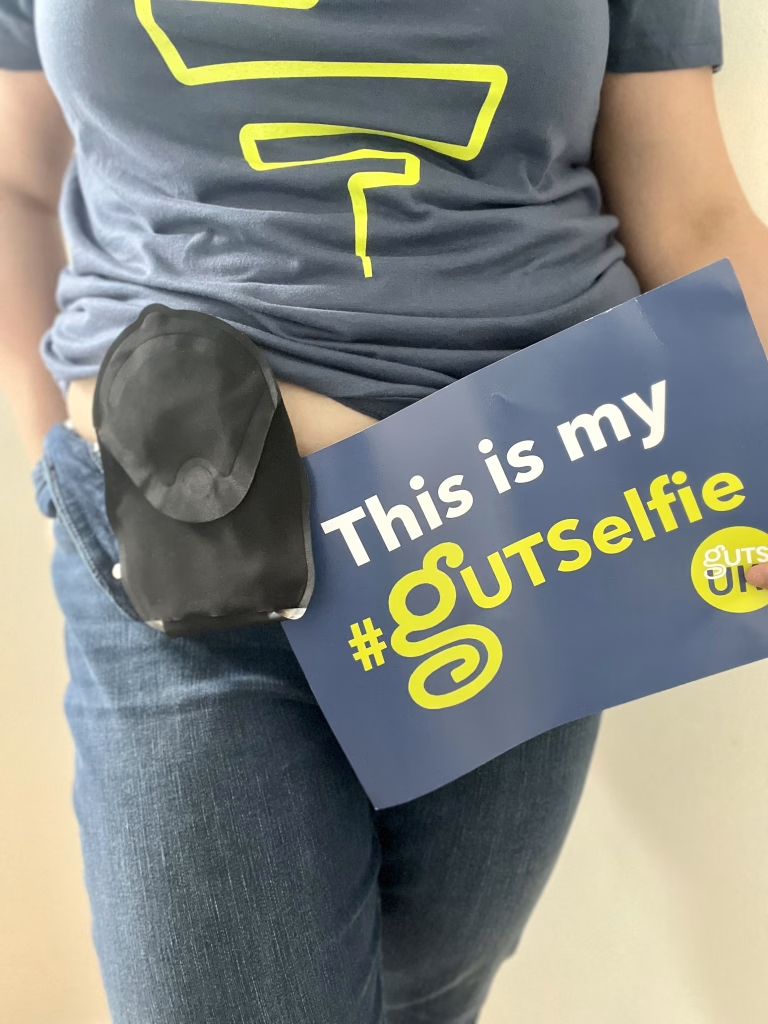
Even after representation in TV shows with millions of viewers, I still get comments like, “Oh bless, you’re too young for that,” when I tell people I have a stoma.
A Gap in Education: Should We Teach Kids About Chronic Illness?
I didn’t know about Ulcerative Colitis until I was diagnosed with it. A life-changing chronic illness that can develop at any age, but is most commonly diagnosed between the ages of 15 and 25.
Where was that in my education? I was taught about nutrition, how what I eat affects my health, the risks of smoking and excessive drinking, and how drugs could kill me.
But no one ever mentioned anything like blood in your poo or stomas. Why? Is it considered too embarrassing to talk about? Whose responsibility is it? Parents, doctors, charities?
I remember seeing health posters displayed in the girls’ toilets at school, but no one ever explained them or talked about them in any real detail. And the thing is… children living with stomas and chronic illnesses already attend school.
Some educate their friends and receive support. Some are bullied. And some…shockingly, as I’ve read in a few stories, are told not to draw attention to their health conditions.
But what if a child was experiencing symptoms of a chronic illness that could put their health at risk? What if they had no one safe to talk to, no resources to turn to, and no knowledge of what might be happening to them?
There are always debates about what children should be taught in school. I believe chronic conditions, and how they can affect the body, should be part of that education.
Why I Speak Up
Sure, living with a stoma means my handbag always has more supplies than snacks. It isn’t always easy. But I’m here. I’m living, laughing, leaking (on occasion), and loving my second chance.
I’m proud to be an ostomate and proud to be alive, which is a crazy sentence to say. My stoma gave me my life back. And if that means I live with it for the rest of my life, then so be it.
I know the stigma and negative online comments won’t disappear overnight. But the more we talk, educate and show the truth about stomas and chronic illness, maybe the next person says “I understand why” instead of “I’d rather die”.
If you don’t live with a stoma, I hope reading this helps you understand why visibility matters. And why kindness, curiosity, and compassion go further than judgment ever will.
As always, thanks for reading…


Great article. So many things like health issues are seen as taboo subjects but they need and should be talked about.
Thank you ???? Completely agree! Do you think we should teach children about them, in the hopes it also stops negativity towards people with chronic illnesses and disabilities?
Might be an idea, but it would have to be at an age when the children can understand the whole thing completely